The header is the identification
On screenACTIVE
Icon, asset tag, status badge, and what the machine is underneath. If the tag on the sheet does not match the tag in your hand, stop here; everything below is about a different machine.
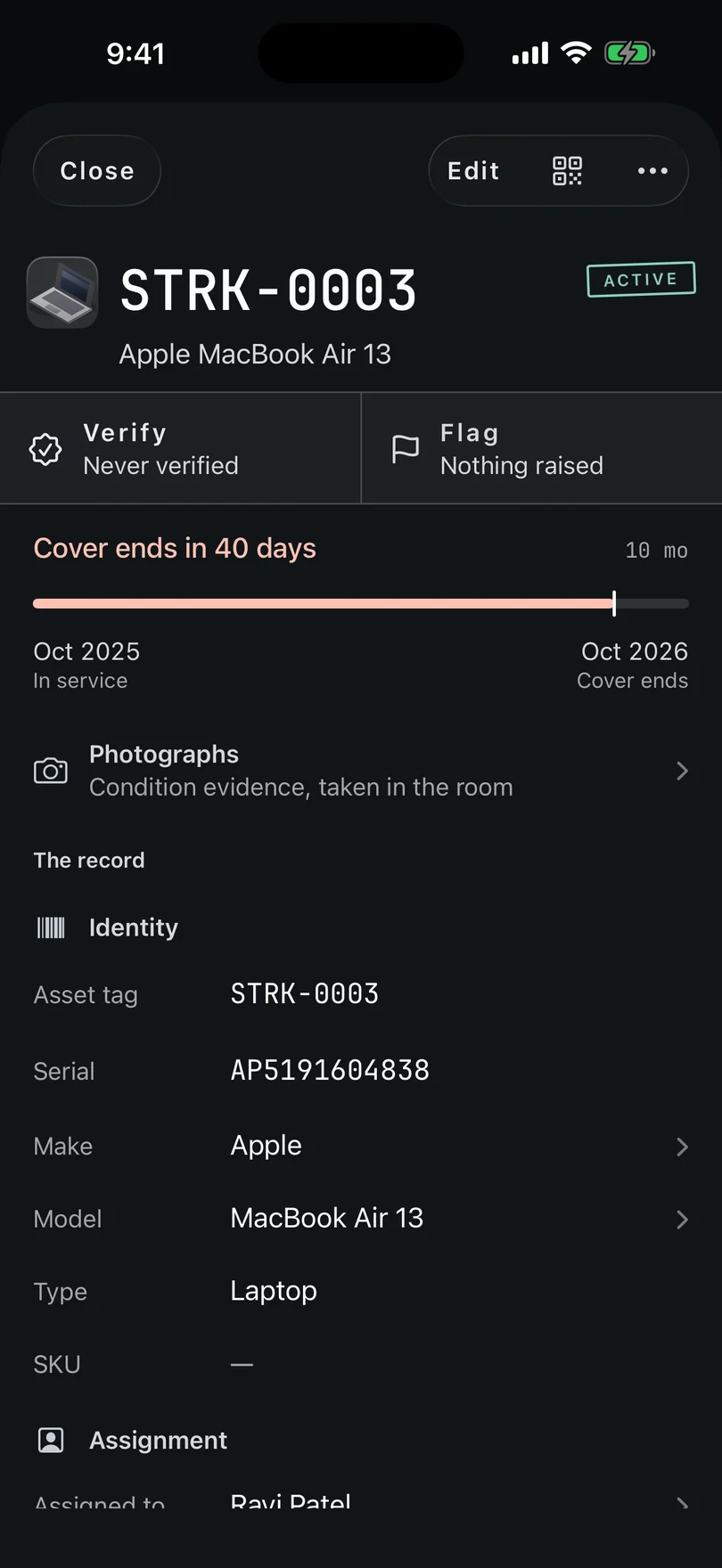
One record, opened. Ceremonies on top, cover next, fields underneath. Verify and Flag are the two things you do
On screenVerify · Flag
They sit at the top because they are why you opened the record, and each carries its own current state underneath. Verify reads Never verified or Verified 35 days ago. Flag reads Nothing raised until something is raised, and then the whole tile becomes Flagged, Raised for audit. You can see both without going anywhere else.
The cover gauge is the money
A bar from in-service to cover-ends, with the age on the right and a line that says the thing plainly: Cover ends in 40 days, or Cover lapsed 874 days ago. It appears only where there are dates to draw it from, which is another reason a record without a warranty date counts as unfinished.
Photographs is condition evidence
On screenPhotographs
One row, and its subtitle says what the pictures are for: condition evidence, taken in the room. Whether a file has actually left the phone is a per-file standing inside that screen, and Settings → Files is the queue across every record.
Then the record itself, in eight groups
On screenIdentity · Assignment · Location · Condition
Identity, Assignment, Location, Condition, Lifecycle, Finance, Network & disk and Regulated data. Identity is what the machine is and barely changes: asset tag, serial, make, model, type, SKU. Assignment is who has it and changes constantly. They are separated because they have completely different lifespans, and mixing them is how a register ends up with a serial somebody edited. An empty field shows a dash rather than nothing, so you can tell blank from missing.
Stuck on a step, or a screen here does not match the one in front of you? Write to support@depaloconsultingllc.com and say which step. The app moves faster than this page does.