Open the record you mean to change
On screenAssets
From Assets, search and tap the row. Check the tag in the header against the machine before you change anything.
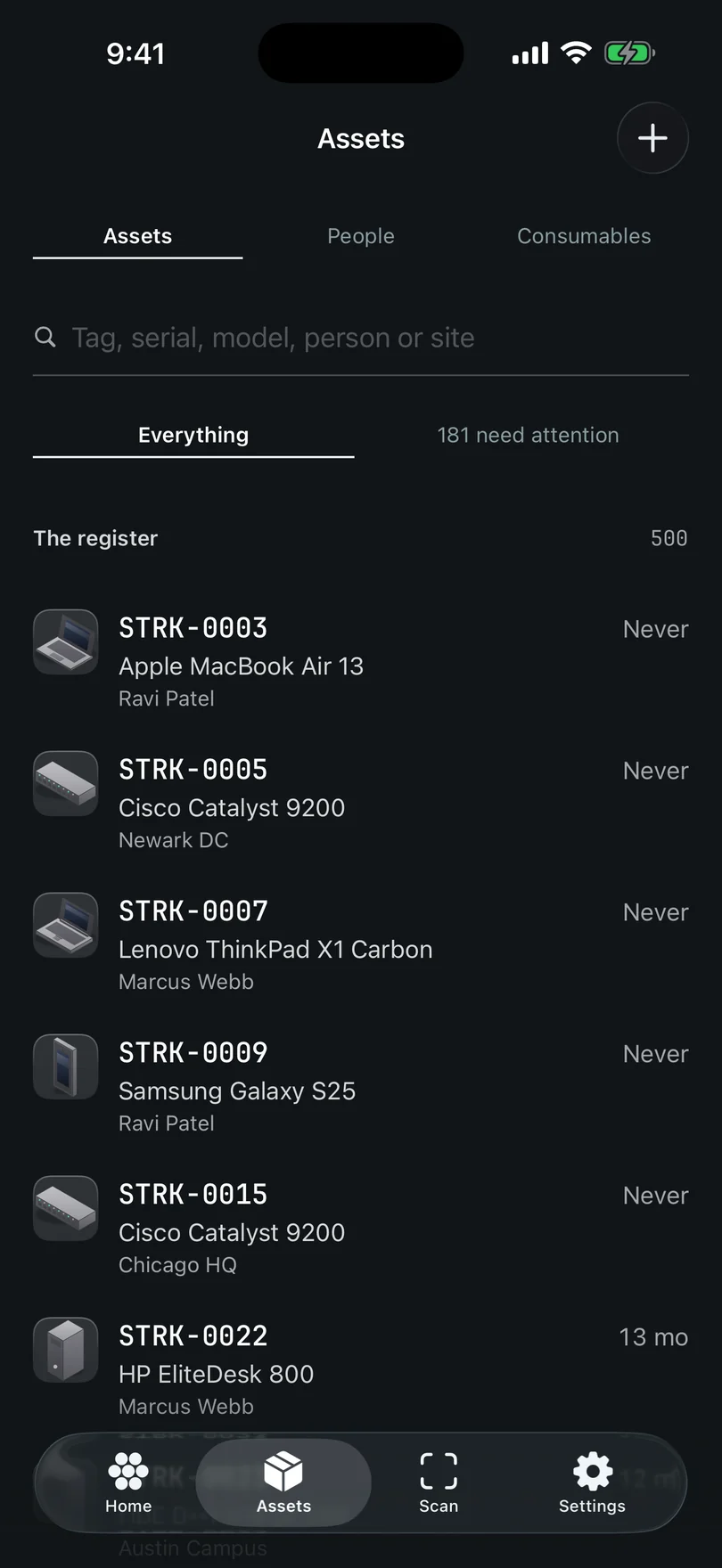
The Assets tab. Three registers behind one search field. Edit is a button that edits
On screenEdit
It is in the toolbar beside the QR symbol and the more menu, with Close on the left. It edits the sheet in place; it does not open a dropdown and it does not push a form. On a device with an NFC radio there is a fourth control between them, which writes a tag rather than changing the record.
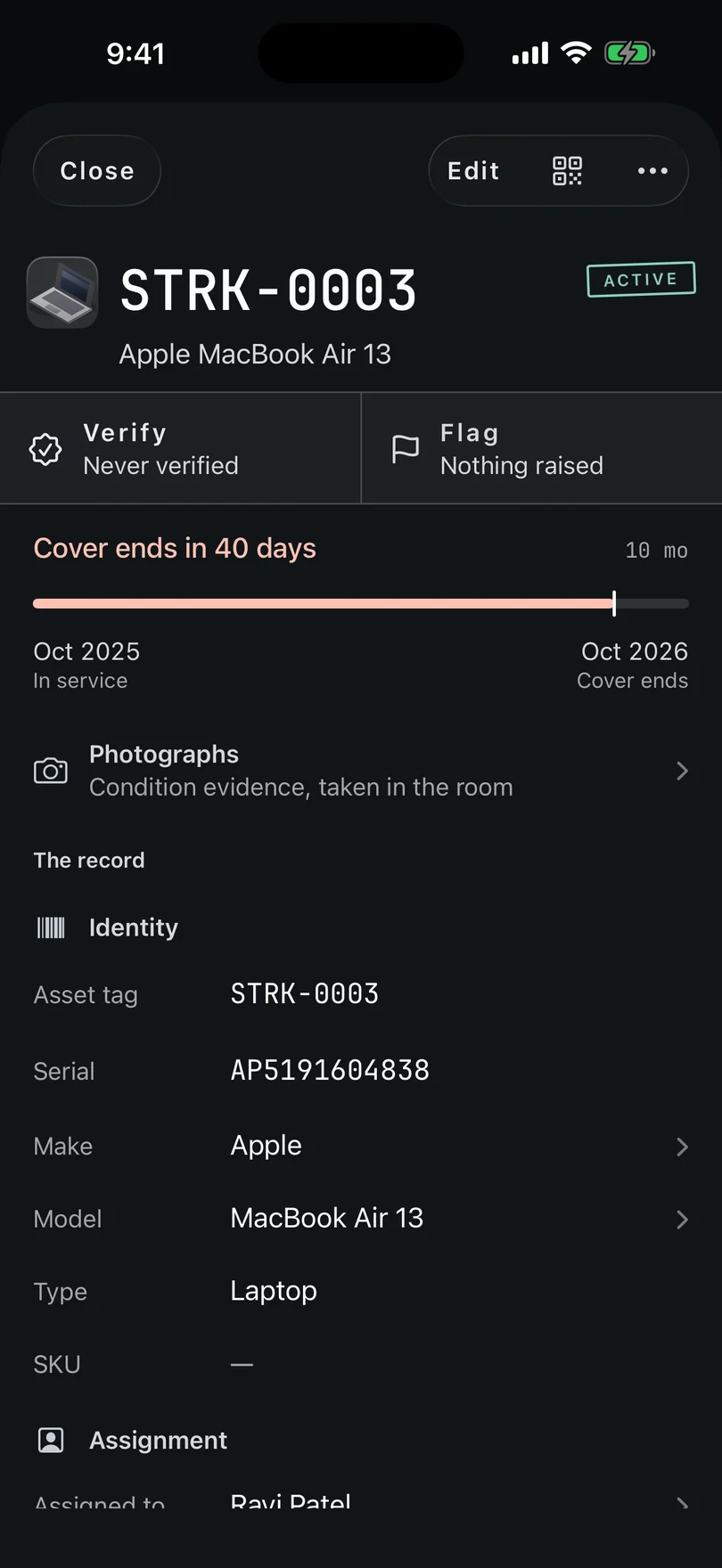
One record, opened. Ceremonies on top, cover next, fields underneath. The sheet becomes editable where it stands
On screenEditing
Close becomes Cancel, the heading over the fields changes from The record to Editing, and a status grid appears under the ceremonies so the one field you change most is a single tap. Tapping any other field pushes a screen for that field alone.
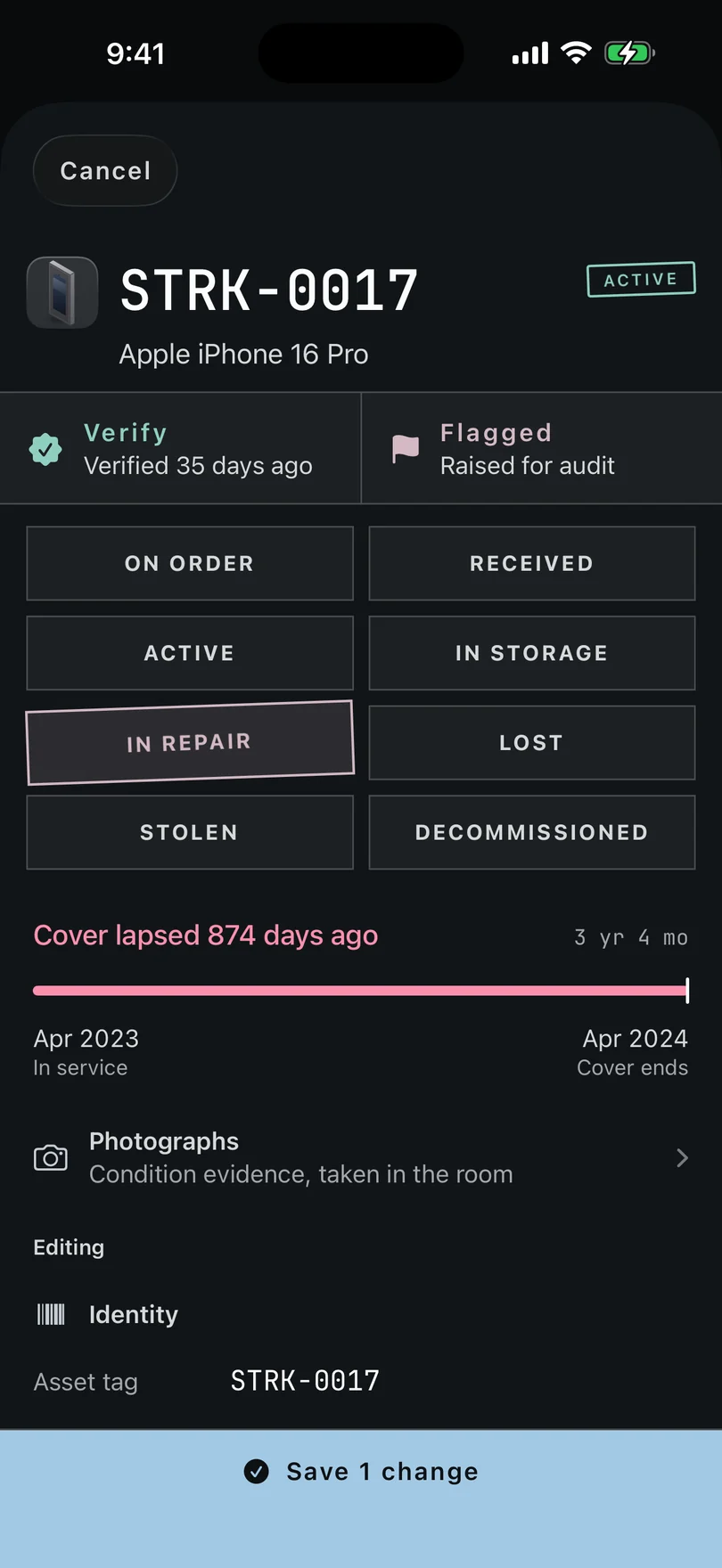
Editing. The change is staged, and the badge still shows the stored value. Changes are staged, and the record still shows the truth
On screenSave 1 change
A staged status is outlined, and the badge in the header goes on showing what is actually stored. The bar along the bottom counts what you have staged: Nothing changed yet, then Save 1 change. Nothing reaches the register until you press it, and one press writes the whole session as one decision rather than as four unrelated edits.
Cancel asks, because there is something to lose
On screenDiscard
Discard 1 change? Nothing has been written yet. Discarding leaves the record exactly as it was. It only asks when you have staged something, so backing out of a sheet you were only reading costs you no taps.
Prefer Verify over editing, when Verify is what you mean
On screenVerify
If the machine is where the record says and belongs to who the record says, that is a verification, not an edit. Verify records that somebody laid eyes on it. An edit that changes nothing records nothing, and the verification date is the thing an auditor actually tests.
Every change is attributable, including yours
The register keeps who acted and when. This is the point of the product rather than a compliance tax, and it applies to a correction typed at your own desk the same as to a reassignment made in a stockroom.
Stuck on a step, or a screen here does not match the one in front of you? Write to support@depaloconsultingllc.com and say which step. The app moves faster than this page does.