Before you start
- The machine itself, if you can get to it. A serial read off the label beats a serial typed from an email.
- Nothing else. The form asks for very little on purpose, and the record can be finished later at a desk.
Start from the + on Assets
On screen+
It is alone in the top right of the Assets tab. What opens is not the form, it is a chooser: the register reserves the next tag first, then asks how you want to identify the machine. You can change or add anything afterwards.
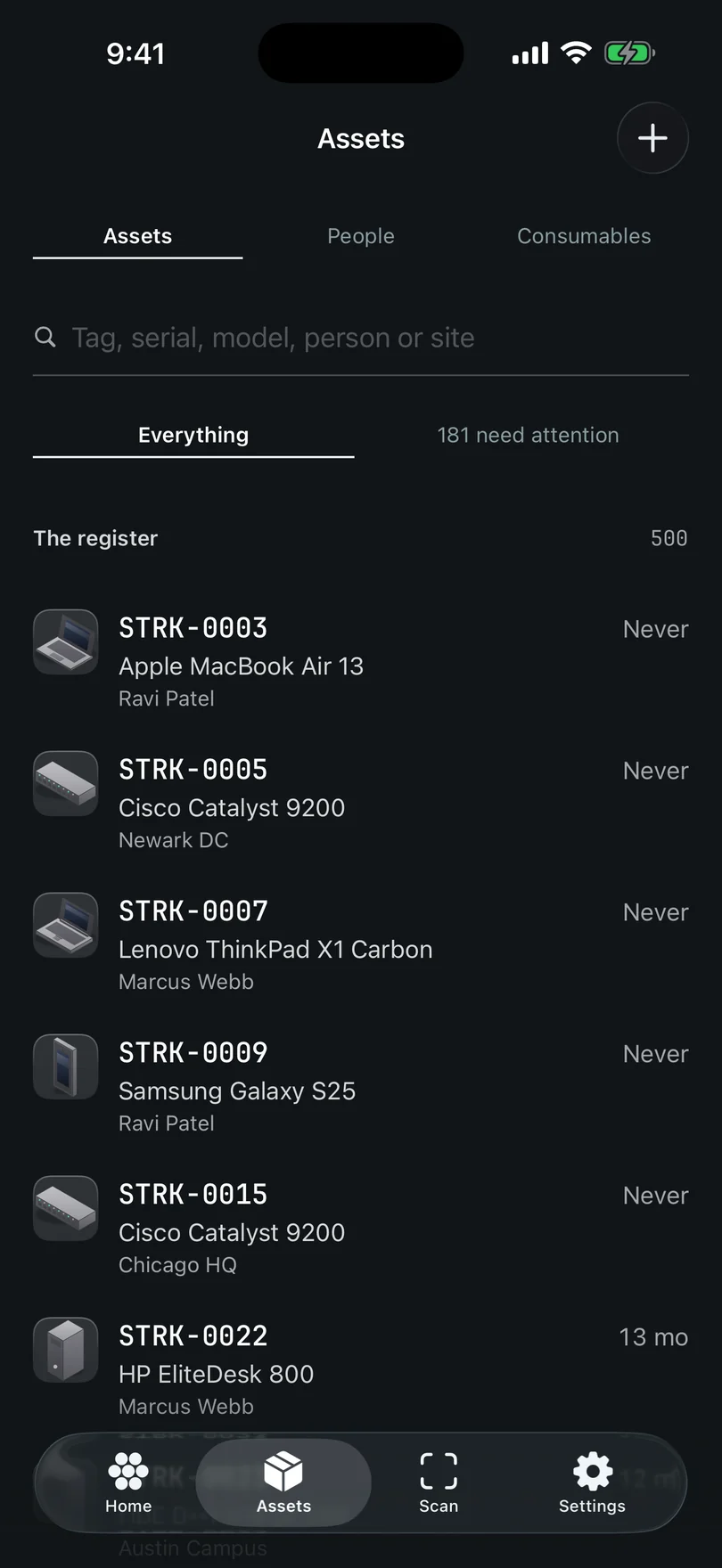
The Assets tab. Three registers behind one search field. Pick how you are going to identify it
On screenScan the asset tag · Photograph the serial · Enter it by hand
Scan the asset tag reads a printed tag or barcode, and it is checked by the code's own digits, so there is nothing to re-read. Photograph the serial reads the serial off the label and makes you confirm it before anything is saved. Enter it by hand is for no barcode, no label, or no camera. The tag is reserved for you either way.
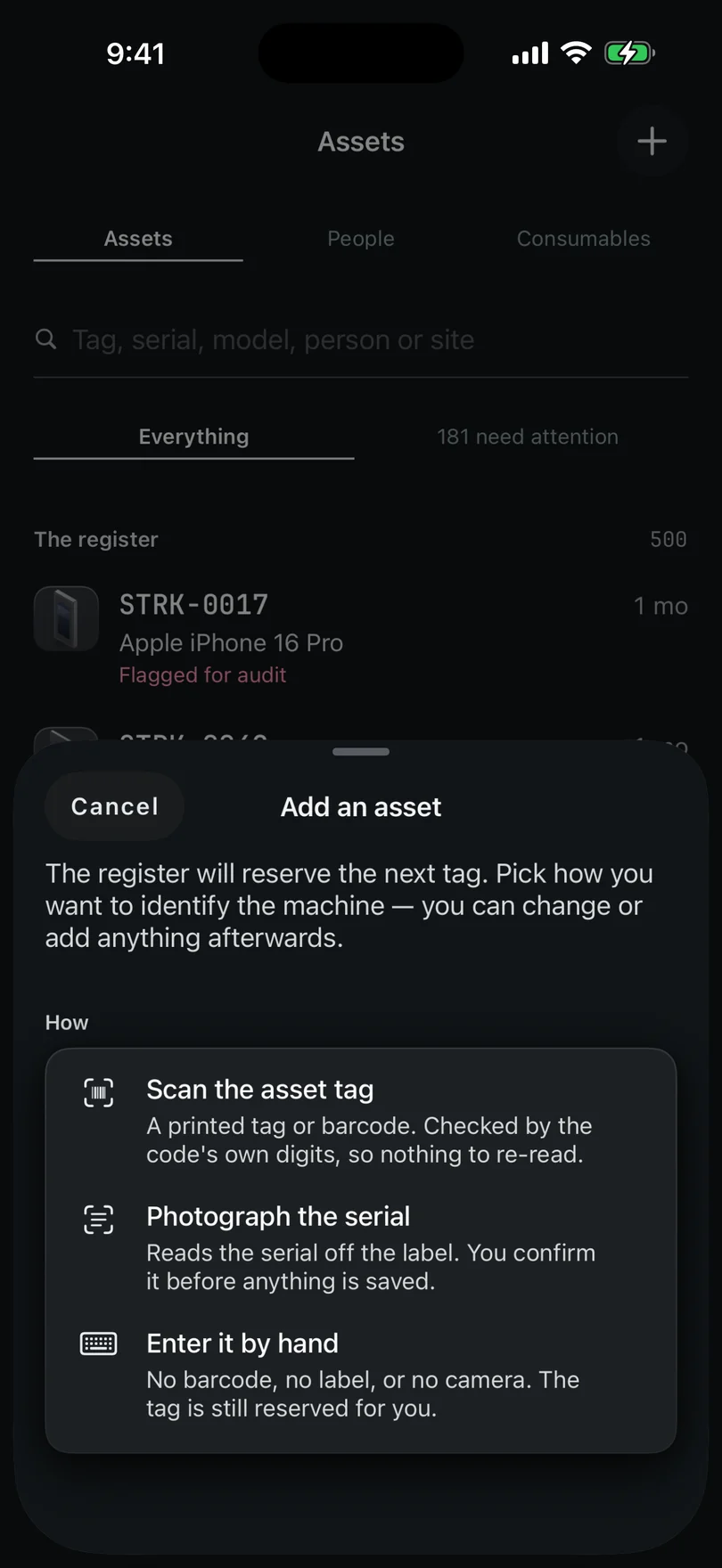
Three ways in. The tag is reserved whichever you pick. The form asks for less than you expect
On screenASSET TAG · SERIAL · MAKE · MODEL · KIND · STATUS · SITE
Asset tag is filled from this device's own block, so two people adding machines in different rooms cannot collide. Serial is offered next, then make, model, kind and status, and a site. Make and model carry buttons for the ones this register already uses, which is faster than typing and keeps the spelling consistent.
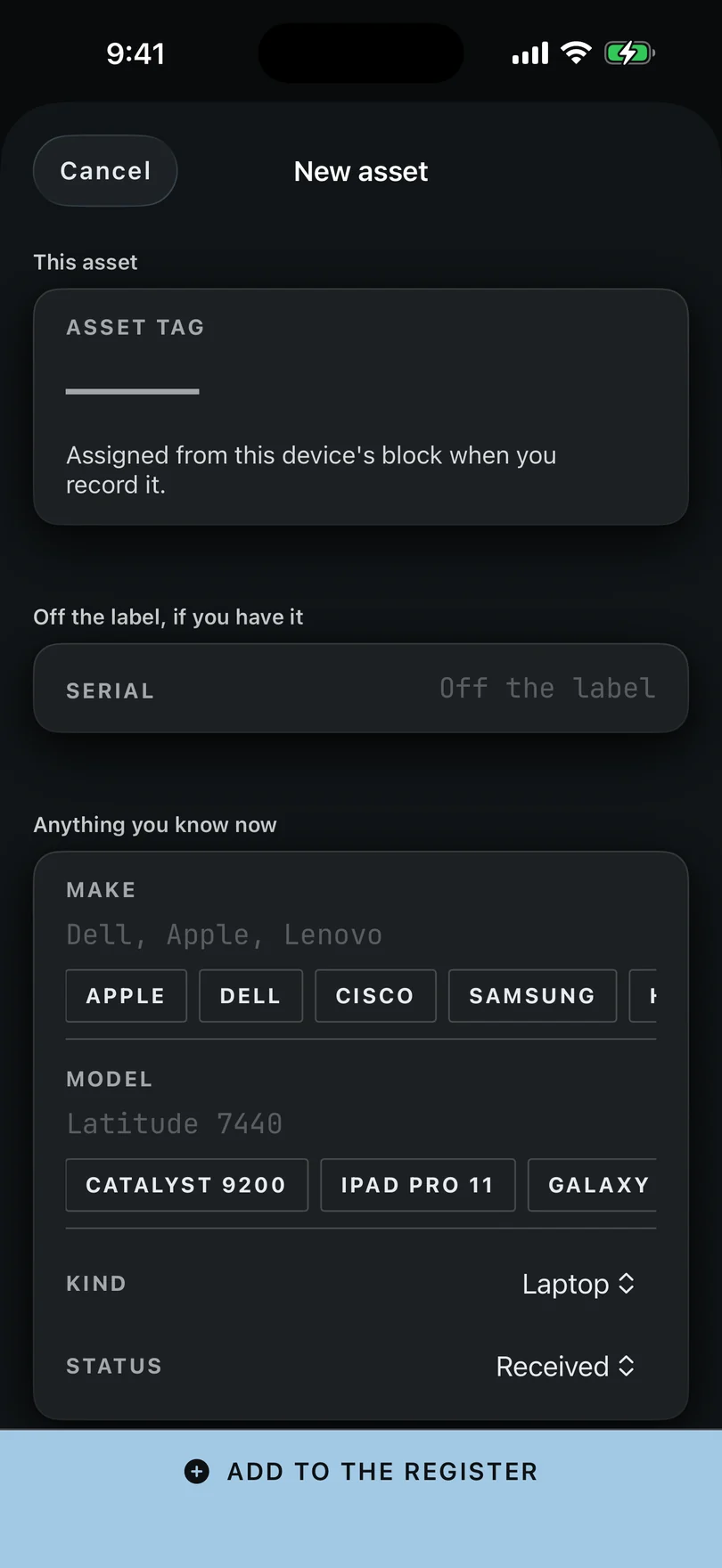
The New asset form, and the short list it actually asks for. Add it, and expect it back on Home
On screenADD TO THE REGISTER
ADD TO THE REGISTER writes it. Note what the form did not ask for: a holder and a warranty date. Those are the two things that make a record finished, so a machine added at a rack lands on Home under the unfinished card with FINISH beside it until somebody supplies them. That is deliberate. Neither is guessed on your behalf.
Photograph it while you are standing there
On screenPhotographs
Open the record and use Photographs. On a phone holding its own register the pictures are kept with the record on the handset; where there is a Mac or a cloud workspace to send them to, each file carries its own standing, and Settings → Files is the queue that tells you whether everything captured has actually landed.
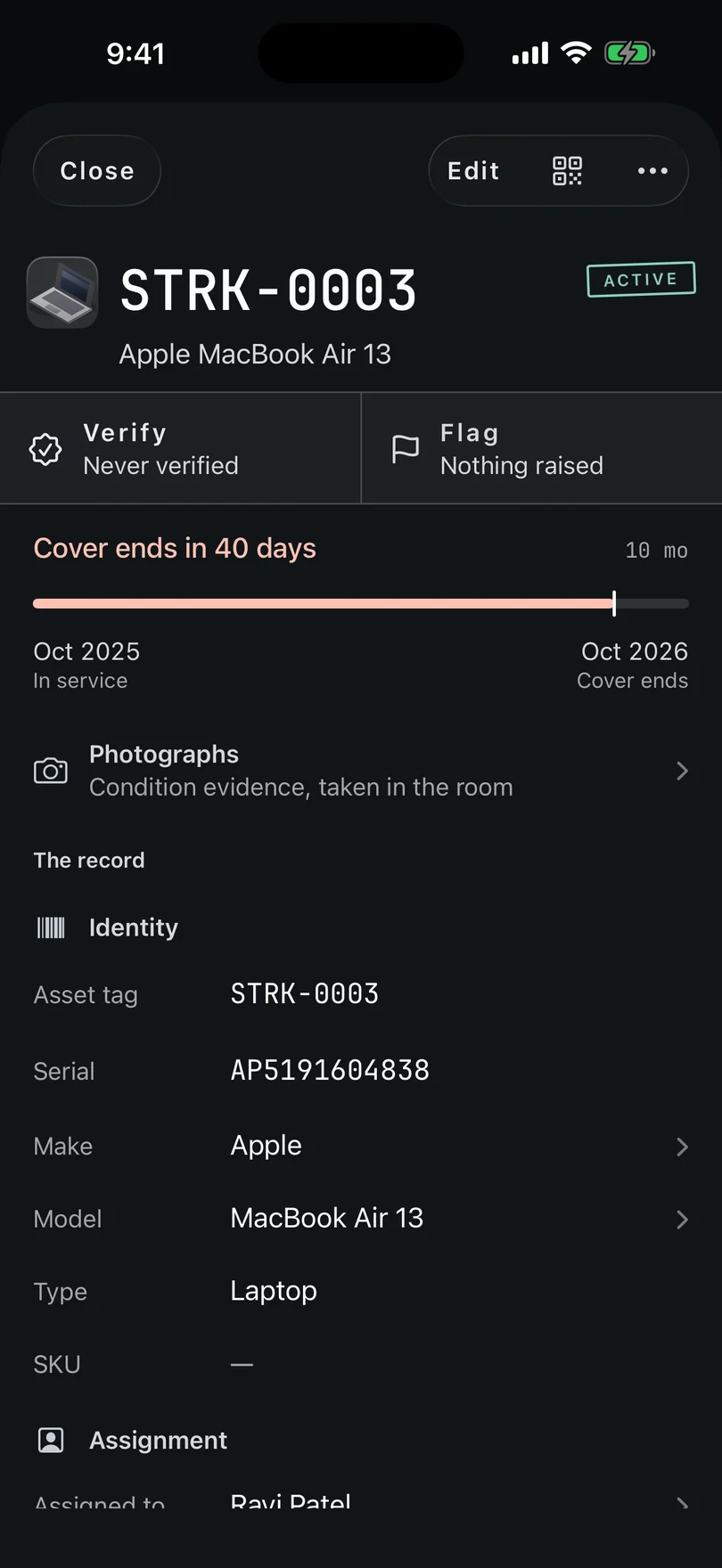
One record, opened. Ceremonies on top, cover next, fields underneath.
Stuck on a step, or a screen here does not match the one in front of you? Write to support@depaloconsultingllc.com and say which step. The app moves faster than this page does.